How to Find Whales — Orcas, Humpbacks, Grays + More — From Shore in Puget Sound
If we had a dollar for the amount of times we’ve heard “I’ve lived here for 30 years and I’ve never seen a whale!" we could probably buy you all your own whale (barring all of the ethical implications, of course).
The truth is, you could probably see a whale every single day in Puget Sound if you had the time, patience, and knowledge. The first two of those are up to you, but we’ve got you covered on the last one, so keep on reading for all of your tips about how to consistently see whales in Puget Sound (or anywhere!).
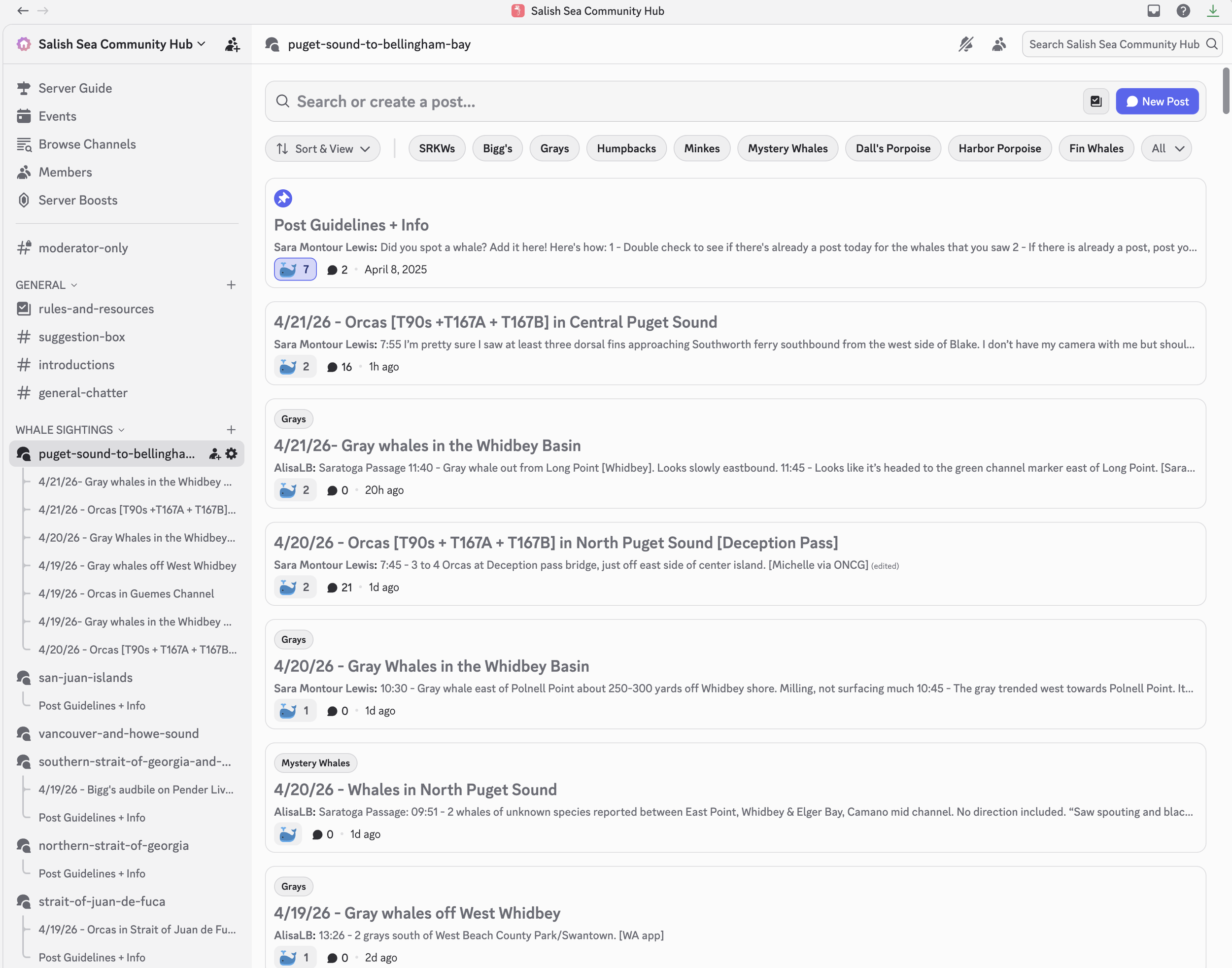
Step 1 — Sightings
You could stumble upon whales yourself, which has happened to us before and it’s a magical experience, but the most common way to reliably find whales on any given day is to tap into sightings that have already happened so you have a little bit of a head start. Like all good things in life we start with community and you’re in luck because people have been tracking whales in Puget Sound for decades and there are already robust communities helping each other out in this way.
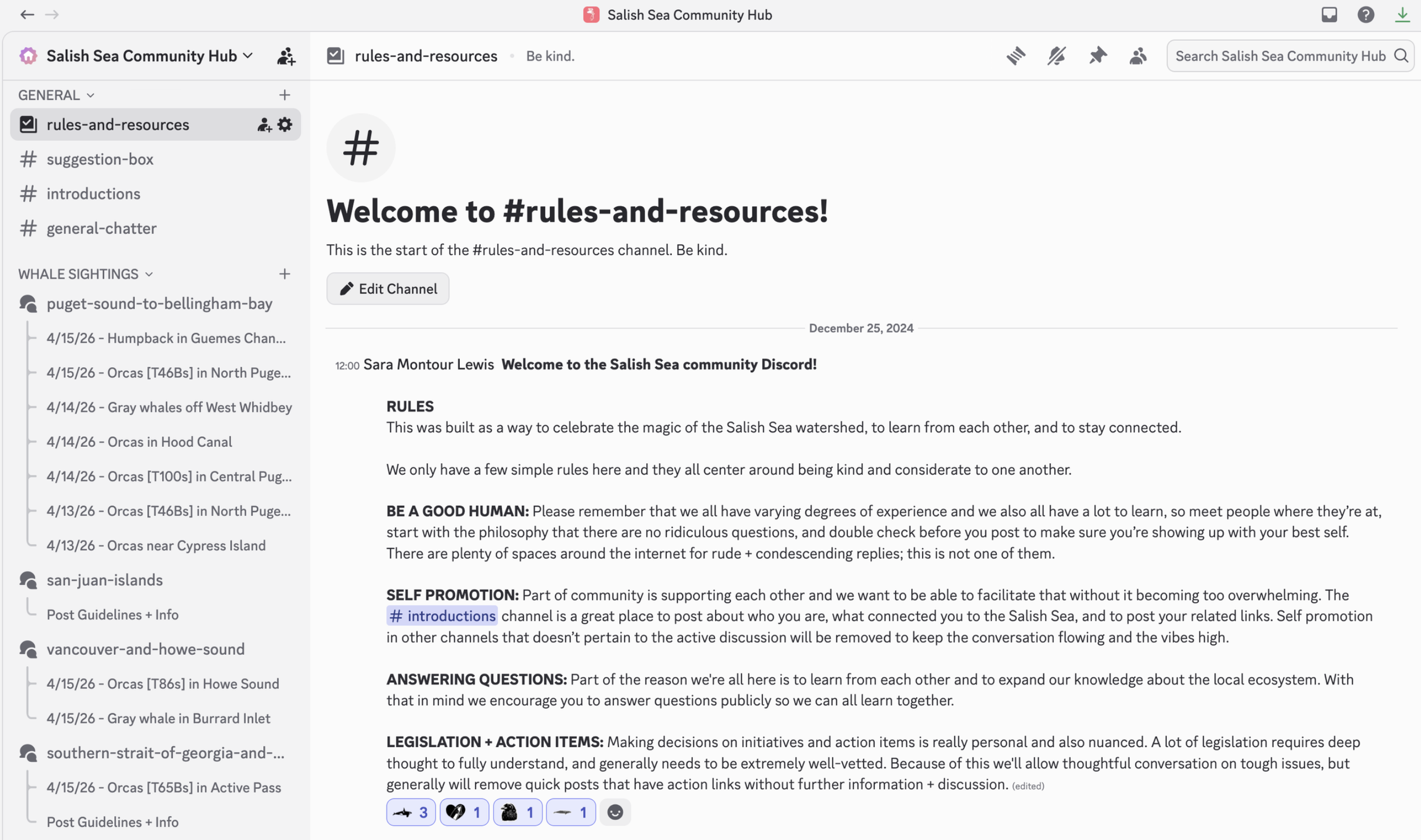
A lot of the existing sightings networks are housed in groups and pages on Facebook, or on private messaging platforms like WhatsApp. As all Meta products become more and more algorithmically centered we’re finding them to be less effective for this so we brainstormed with a bunch of whale-centered nonprofits to come up with a solution that was public, fostered community, and could connect the entire Salish Sea while still being organized. We landed on starting a Discord server and it’s been perfect! As we go through this guide we’ll use the Salish Sea Community Hub Discord server as the example, and we would love it if you’d join us over there, but all of these tips work with any sightings network or independent sightings you hear about and we also coordinate with other networks and share sightings to keep everything as collaborative as possible.
So! Jump over to your favorite sightings network, or a few of them, and see if anyone else has already spotted whales today. Look for whales that are manageable for you to get to and that are heading in a direction with plenty of viewing opportunities and public access.
Step 2 — To The Beach!
Ok, you know what to look for, you’ve found some sightings, and you’re ready to head out. Where in the world do you go?
This is arguably the make or break point for crossing paths with the whales and it’s where some people miscalculate just a tiny bit and end up chasing the whales all day instead of being in the right place at the right time. This part is also dependent on species because they all behave a little bit differently.
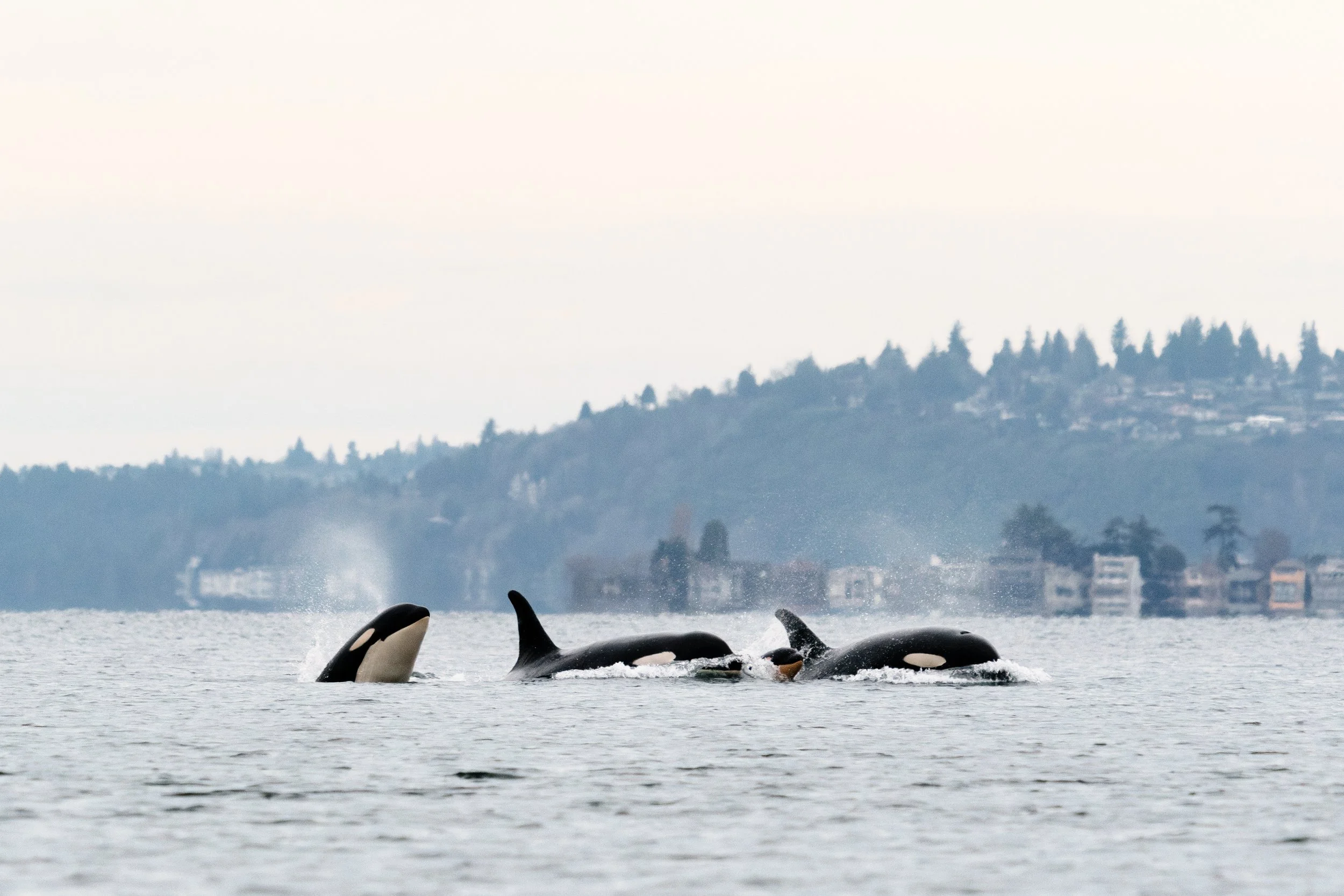
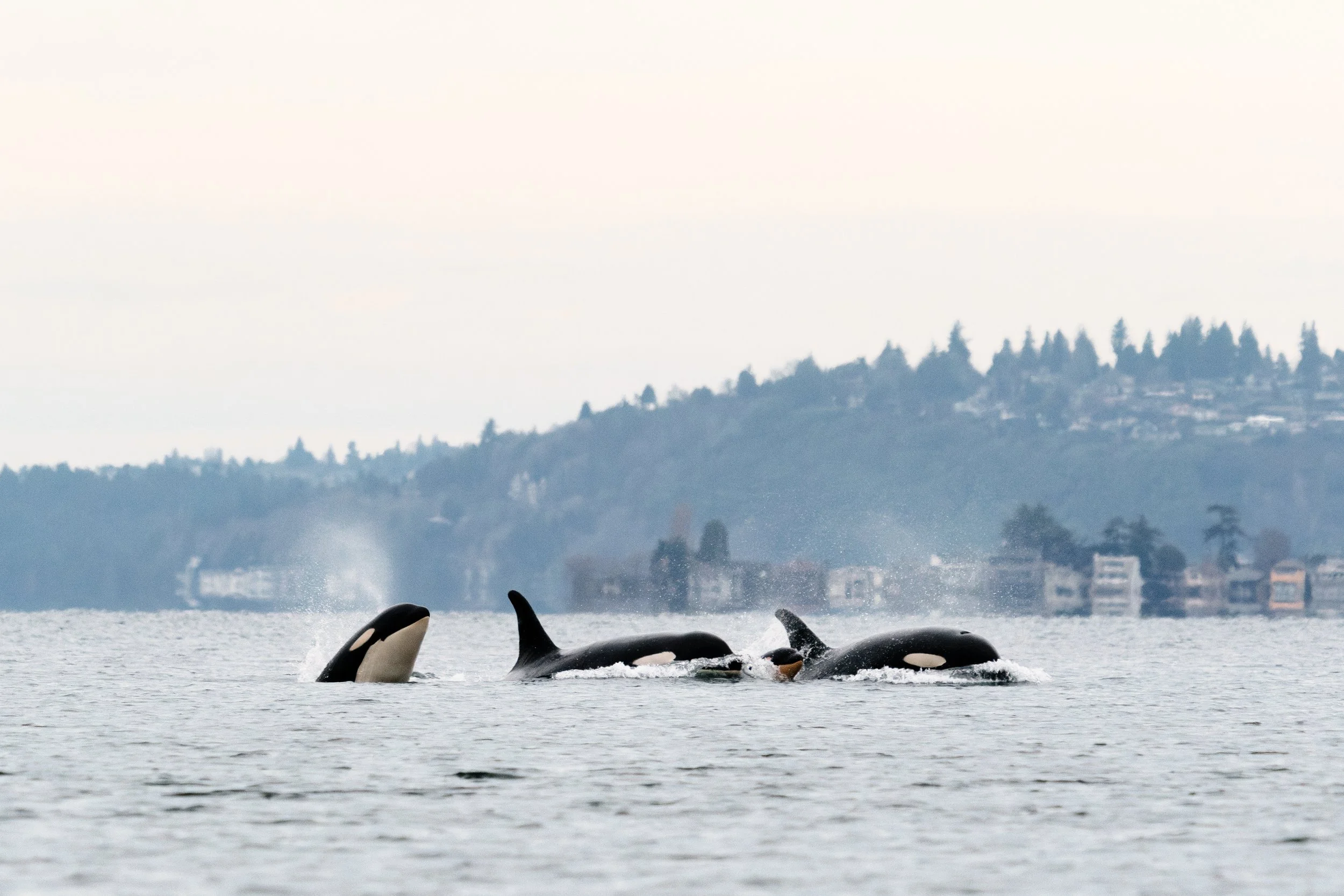
Orcas — If you’re trying to find killer whales you generally want to get ahead of them by quite a bit. They tend to travel pretty quickly (roughly 3-5 miles per hour at cruising speeds) and they also, more often than not, keep going in the same direction. So, for example, if you see that there are orcas heading northbound from Golden Gardens Park in Seattle instead of going to Golden Gardens you’re going to want to go further north to catch them when they pass, say Richmond Beach in Shoreline or Marina Beach Park in Edmonds, depending on where you’re coming from and how fast they’re going. It’s nice to go on these adventures with friends, too, so they can keep tabs on sightings as you’re driving.
Exceptions: If it’s reported that they’re hunting or milling there’s a good chance that they’ll stick around for a while and/or that they’ll change direction once they start moving again so it’s good to kind of stay close to the location where they’re hunting and make a plan once they seem committed to a new direction.
Baleen Whales — Baleen whales like humpbacks or gray whales are a little more unpredictable and they can either travel quickly like orcas or they can stay in one place for hours (or even days!) at a time. Usually if we’re going to see baleen whales we’ll look at the pattern for that day, or for the days before, to see if the trend is for them to hang in one spot or to travel through. More often than not when trying to find baleen whales we’ll go to the location of the last sighting first and start there, unless it’s been clearly reported that they’re in travel mode. If that’s the case we’ll get ahead of them just like when viewing orcas.
All Species — Unless we know an area, or an individual whale, really well and are confident about their patterns, we like to start our search on any given day at a higher location and then work our way down to the shoreline. We’ll try to seek out elevated roads or lookouts to get a really high, wide perspective so we can spot them far away first, quickly get a sense of where they are and what they’re doing, and then dial in where we want to go to next.
Take our Golden Gardens example above: we almost always stop on Sunset Hill first if there are whales nearby because it’s high up and it gives a better view of the entire waterway instead of the shallow view that you get from the beach.
Step 3 — Know What To Look For
This may sound silly and I think I heard a few of you yell “we’re looking for whales, silly!” but the first thing that will guide you in the right direction is understanding how whales behave and what you’re even looking for as you’re looking out towards the water. The first signs of a whale are rarely a majestic breach 10 feet from shore. Usually it’s swirling birds in a concentrated area on the water, a weird wave-looking-thing that you thought you saw out of the corner of your eye, or driftwood that you swear was there one minute but is now gone. The best way to find whales is to train your eye on what signs to pick up on when you’re near the water.
So! What are those signs?
1: Blows + Quick Surfacings — Usually when we get to the beach we’ll start with a quick scan of the entire horizon without binoculars. You’d be surprised what your eye can pick up on and sometimes having a wide peripheral view is really helpful. If we don’t see anything after a couple of minutes we’ll grab our binos and scan back and forth slowly along the horizon line. Generally what we’re looking for are blows from the whales exhaling and/or pretty quick, rhythmic surfacings where you see them at the surface of the water, then they dive again and resurface seconds or minutes later. Tip! If they’re in steady travel mode you can time their dives and they’ll likely surface again on a pretty consistent timeline.
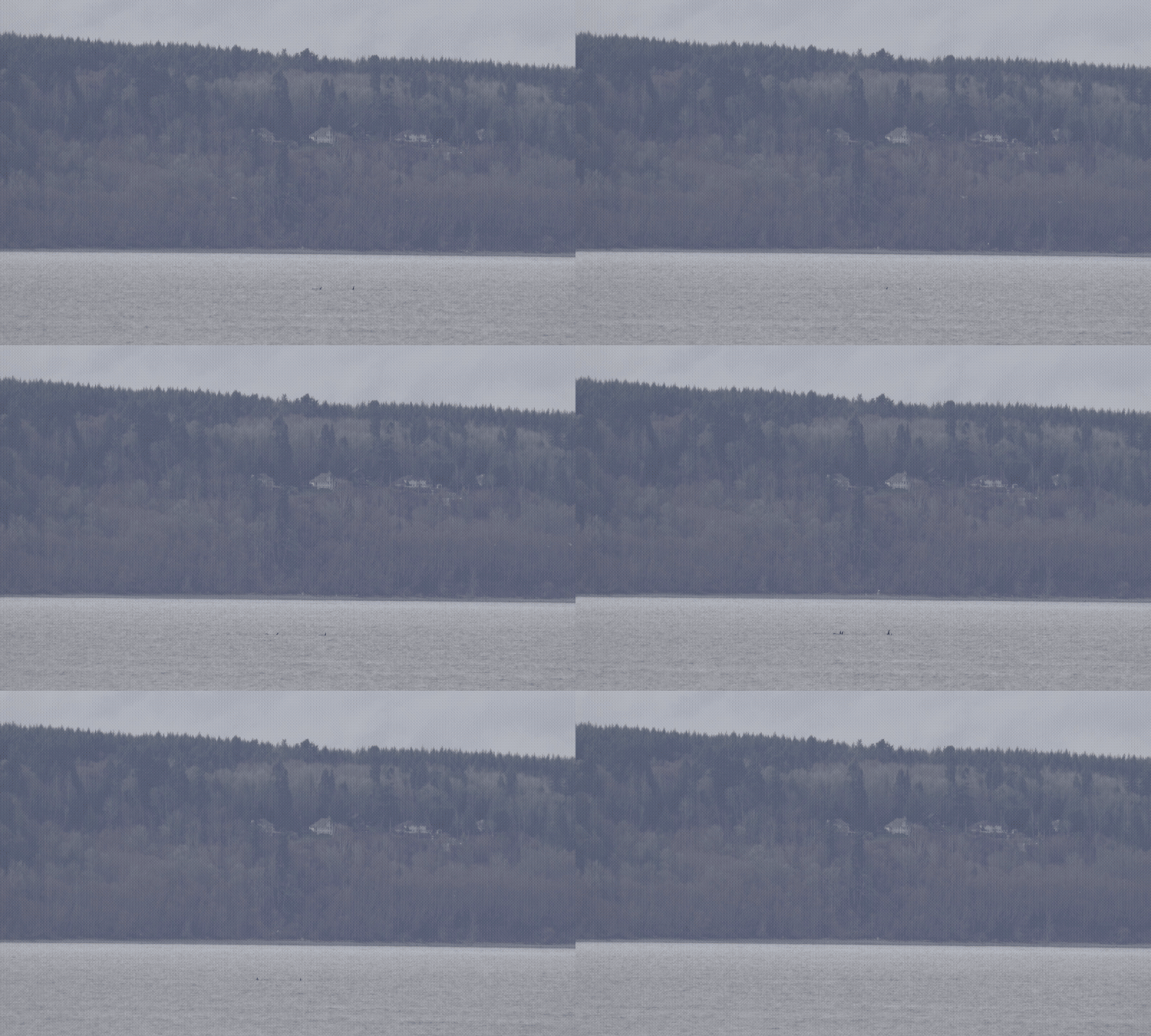
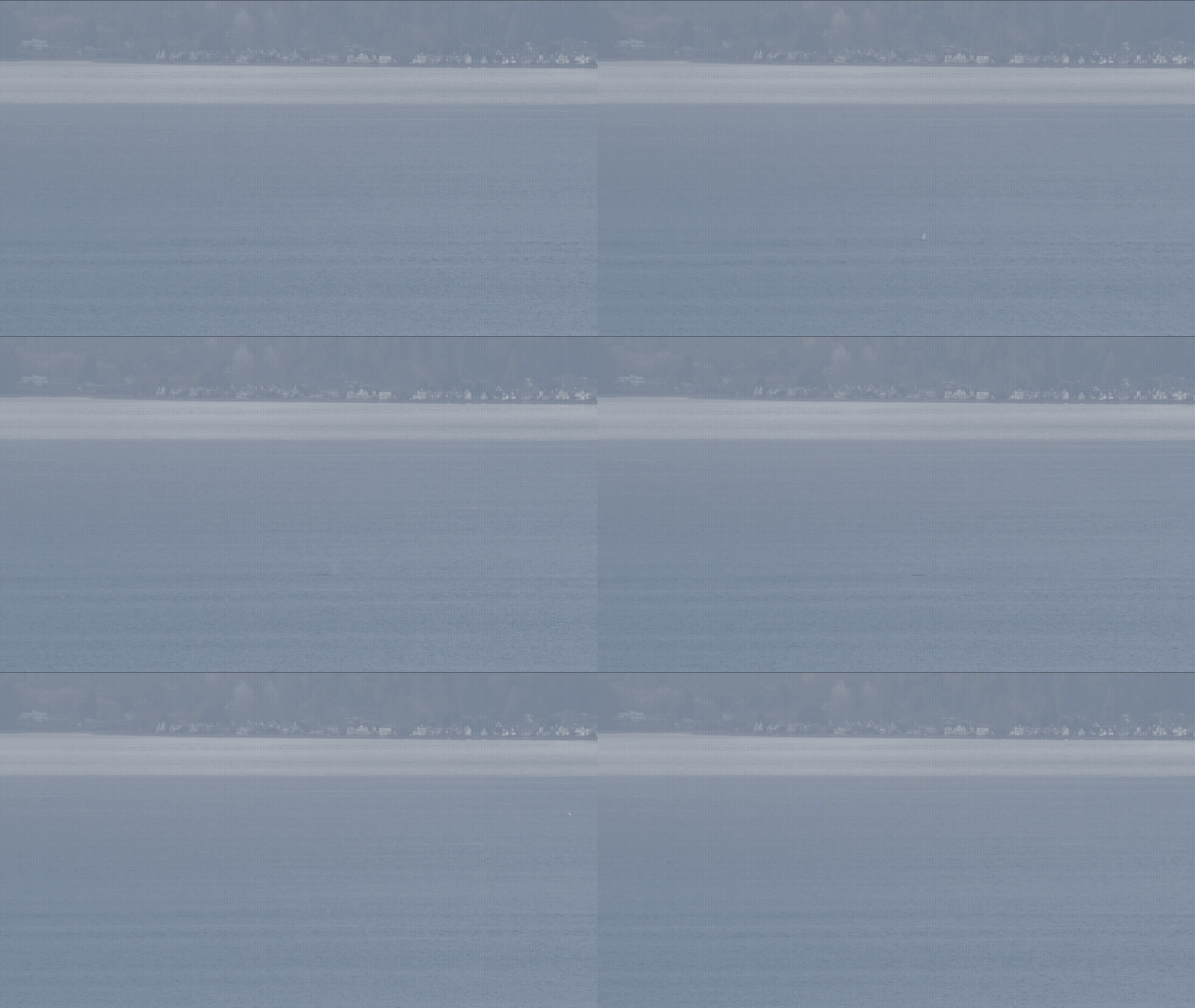
These blows + patterns vary by species and sometimes if there are choppy waves, really active diving birds, floating driftwood, or thermoregulating sea lions you can be fooled, but these two things are what we would recommend training your eye to find. Generally if it’s sitting on top of the water it’s either a seal, sea lion, driftwood, or birds surfing on driftwood (which looks shockingly similar to an orca).
If you want to dive into the differences in exhalations between the species jump on over to your whale species ID guide!
2: Birds — If you aren’t having luck finding the whales yet keep an eye out for birds above the water. Whales leave behind all kinds of goodies that birds like to scoop up and circling, excited birds can be a tell tale sign that there are whales around.
3: Boats — There are several whale watching boats that operate in and around Puget Sound so if you use an app or website like MarineTraffic you can see where the whale watching vessels are and you can get some hints as to where the whales might be in real time.
*A note on whale watching boats — this can be a heated topic and we all want to keep the whales safe and healthy for years to come. In our experience the whale watching vessels that operate locally are incredibly thoughtful and cautious when it comes to watching whales and they’re generally working directly with a lot of the whale conservation organizations to collaborate on projects and to report about daily encounters because orgs can’t always be on the water. NOAA + WDFW also don’t have enough resources to patrol and enforce the laws on the water daily and given that we’ve seen whale watching captains step in to alert private boaters or commercial vessels about whales numerous times. If these waters were completely free from boats it would undoubtedly be better for the whales, but the reality is that we live in one of the busiest waterways in the world with endless traffic from small fishing boats to giant container ships, cruise ships, and military vessels. For better or worse the whale watching captains understand the movements of the whales better than anyone and they’re able to add some guidance on the water for other captains that are less knowledgeable and/or have a lot to keep track of as they’re navigating these busy waters. We’ve also personally seen them stop mindless recreational boaters as they speed directly towards the whales and alert the proper authorities to people being reckless. These guys have a stake in the health of these whales, but more realistically almost all of the captains + naturalists that we’ve met on these boats got into the field because they genuinely care for these creatures and have chosen to spend their lives in their presence.
** One other thing is that the depth perception across the water is a wild thing and it surprises us constantly. When you’re standing on the beach and you swear a boat is hugging the shoreline across you the reality is that it’s probably smack dab in the middle of the channel with miles between it and the shoreline. This is a fun little game we play on the beach with the MarineTraffic app and we encourage you to try it! Pick a boat and try to guess exactly where it is in the water; the answer might surprise you! The point of this is that we know it’s really stressful to see boats in proximity to the whales so it can be helpful to remind yourself that depth perception is really distorted when you’re close to the water and a boat that seems like it’s right on top of the whales could, shockingly, be miles away.
***Having said all of that, if you see a boater behaving recklessly in the presence of whales please take videos that include the registration number of the boat, if possible, and report it directly to WDFW + NOAA + Be Whale Wise
Things That Are Not Whales But Very Much Look Like It At Times:
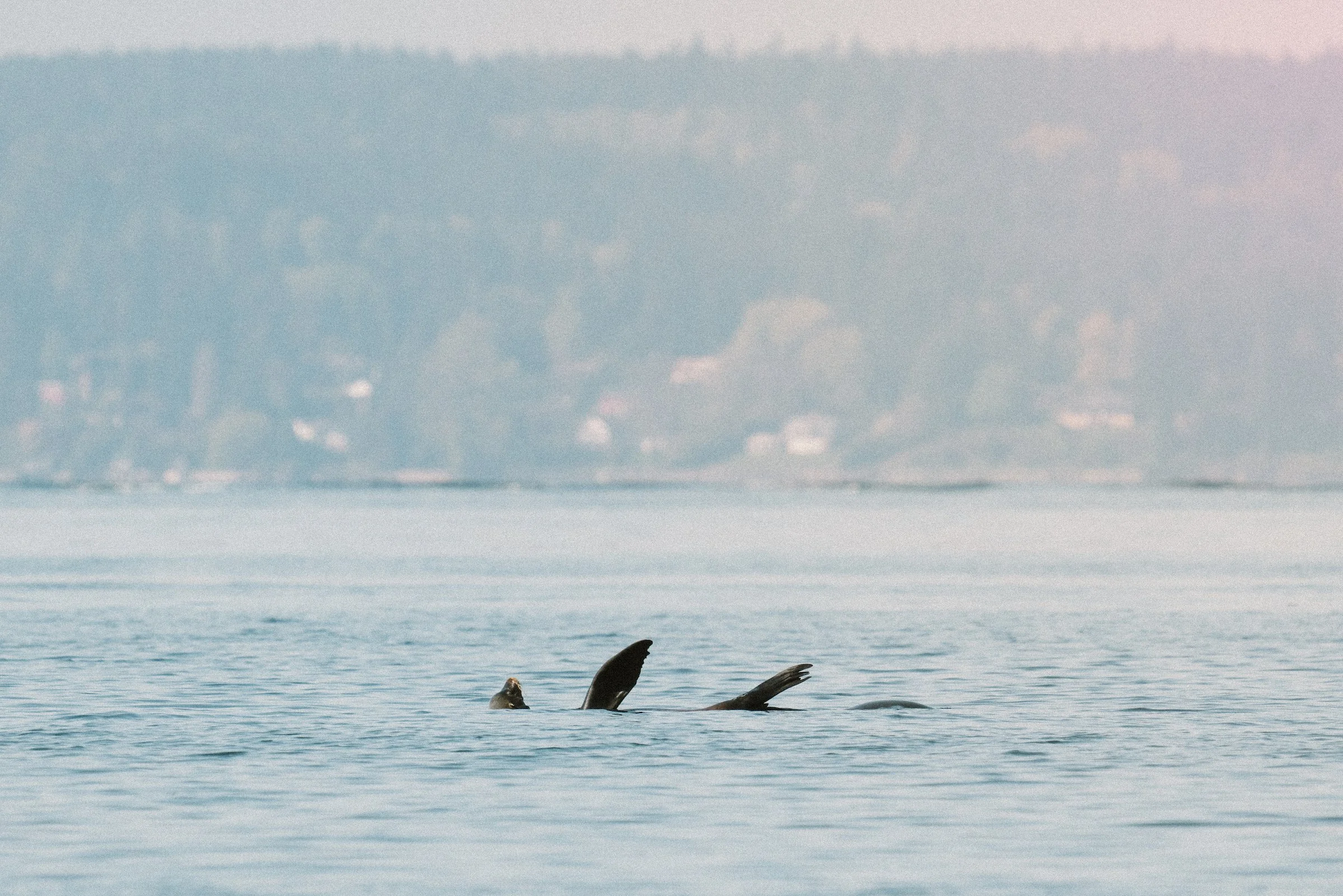
Thermoregulating Sea Lions
Sea lions regulate their body temperature by lifting parts of their body out of the water and this can create a VERY convincing orca impersonation.
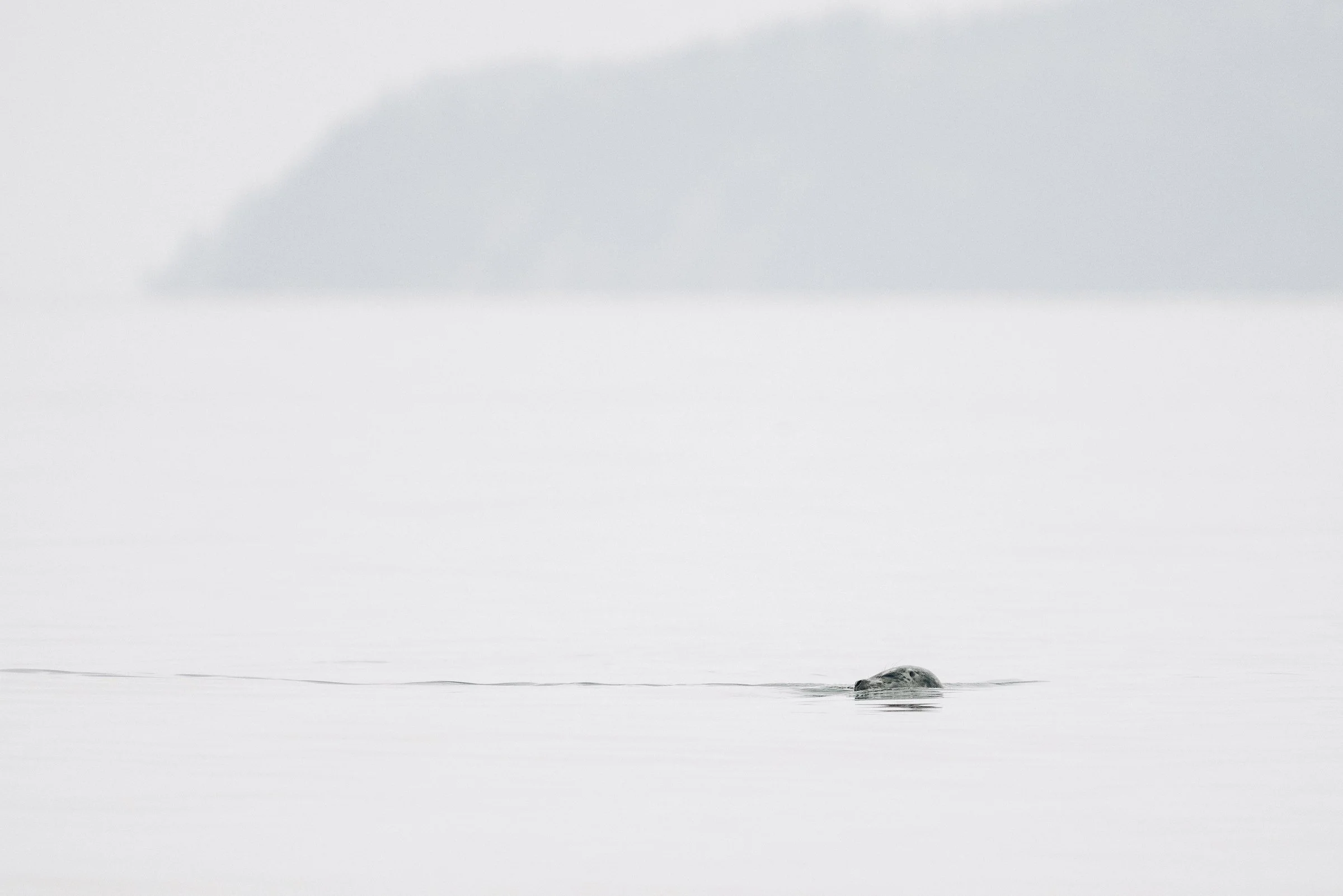
Resting Harbor Seals
If you see something staying at the surface of the water while slowly moving and occasionally diving you’ve probably found a super cute harbor seal.
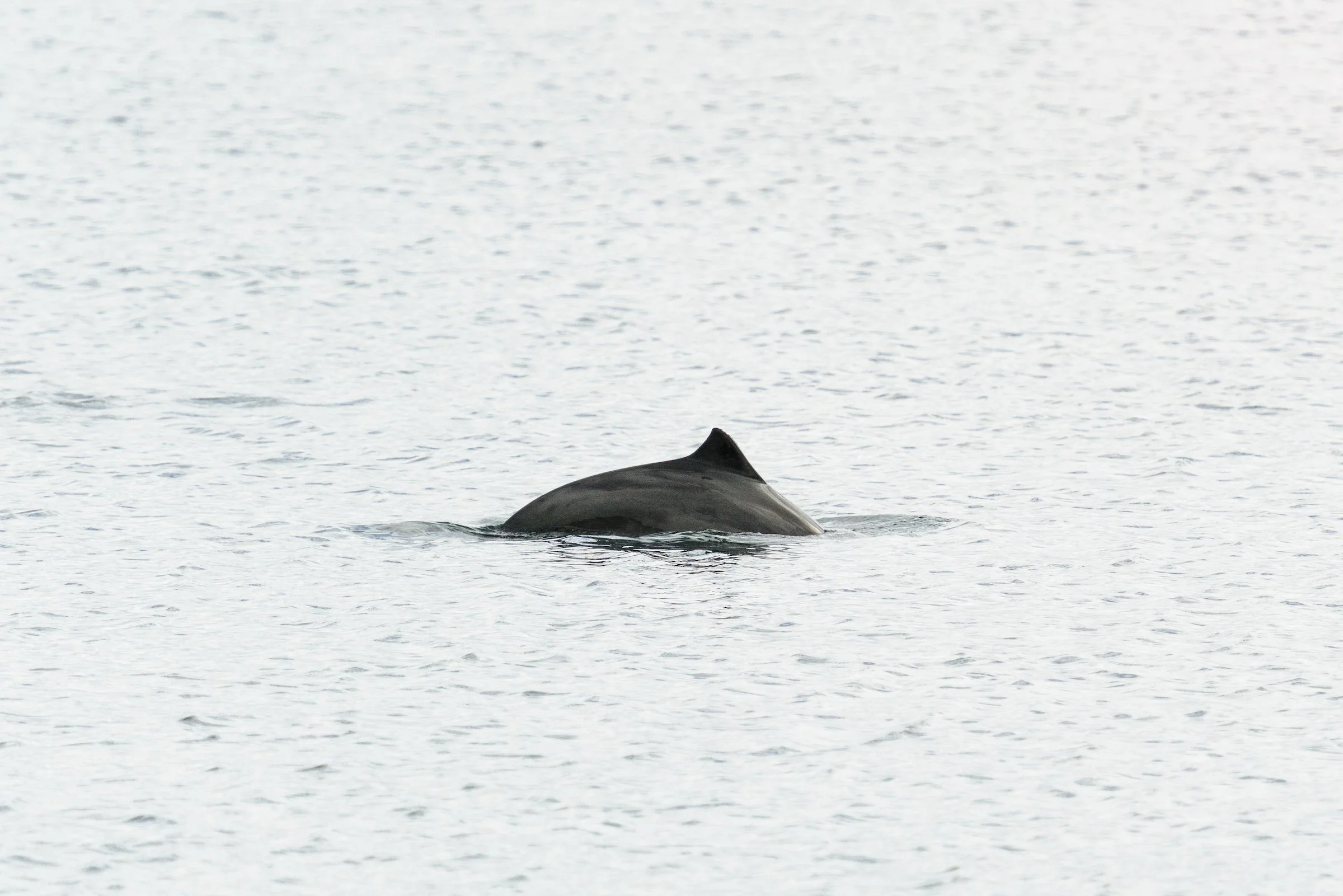
Porpoises
Unbelievably adorable. Technically toothed whales. Not a baby orca.
Step 4 — Patience + Persistence
Ok! You found the whales: now what?! Well, you can high five yourself and everyone around you, share your binoculars on the beach so other people can get the same joy, share your sighting with the community so other people can have the same luck you did, and you can pack it in for the day!
Or… you can be patient and put in some more time to really get the most out of these particular whales on this particular day. If you’d like to do that, put those binoculars back up and engage all of your curiosity to answer some questions that will help you decide if there’s more to be had or if the whales are very casual in this moment and this is as good as it gets (which is still pretty dang great, right?).
1: What kind of whales are they? For help answering this question jump over to our Whale Species ID guide for Puget Sound. Sometimes this alone is enough to garner insane excitement. Case in point: very recently we thought we were going to the beach to see some of our relatively common gray whales because that’s what the reports conveyed. When we got there and saw it surface we literally screamed because it turned out it was a FIN WHALE. The second largest whale in the world. The greyhound of the seas. A very rare whale to see in Puget Sound. And a behemoth that was flying under the radar because people just didn’t know that they were seeing something very unique.
Not only will knowing what kind of whales you’re seeing be exciting in and of itself, but you can jump back to Step 2 for a reminder on how these whales might continue moving.
2: What are they doing and which way are they going?
If you’re viewing orcas:
Are they slowly traveling, grouped up together, and surfacing in a pretty repetitive way? They might be sleeping and will likely keep traveling in a similar direction until they wake up.
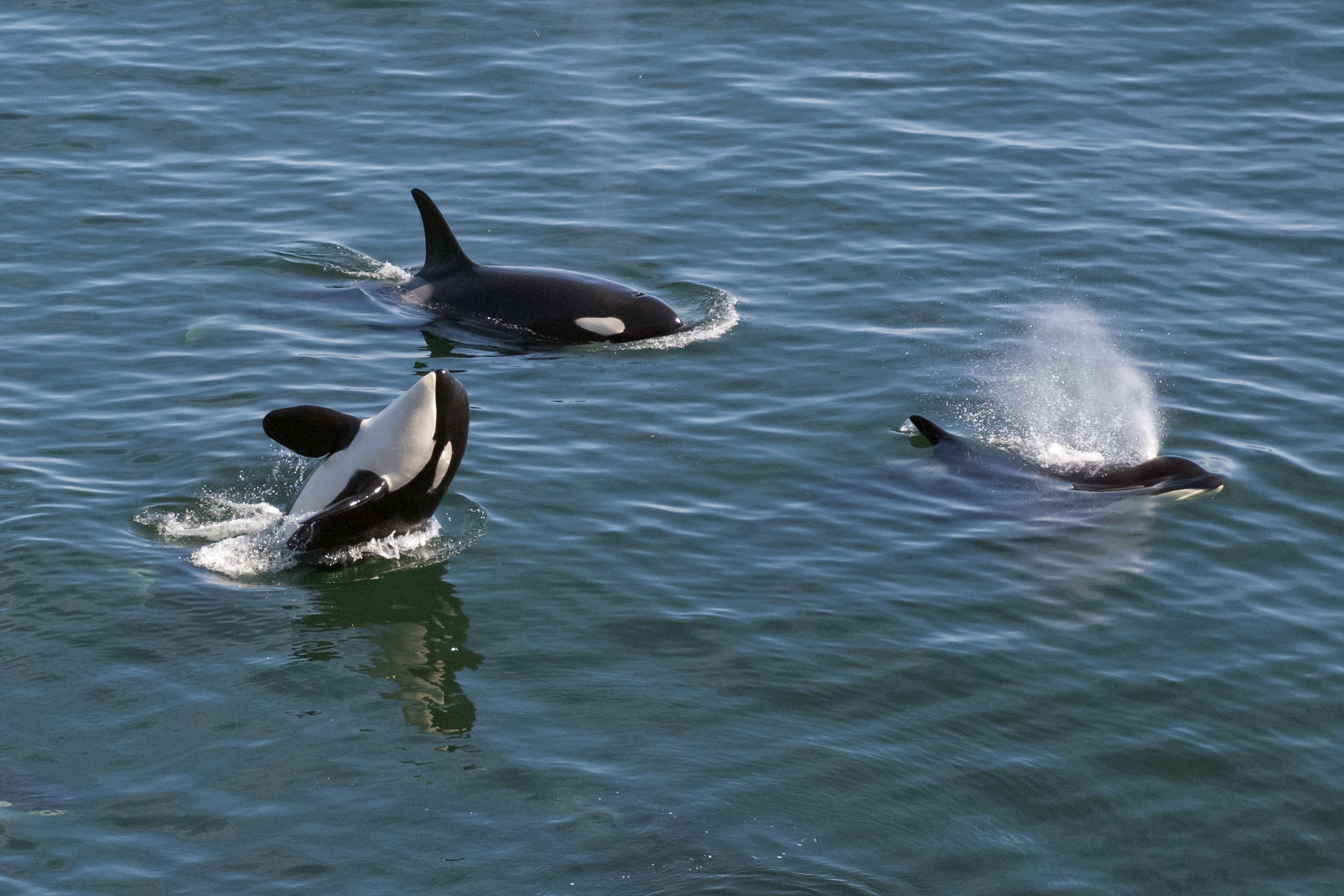
Are they racing at you and leaping out of the water as they travel? They’re porpoising and they’re on a MISSION. Either stay exactly where you’re at and revel at their speed or jump in your car and get miles ahead to find them again because they’ll likely be past you very quickly.
Have they stopped moving, are they making directional changes, or are they breaching a lot in one general area? They’re likely hunting or they just hunted and are celebrating. Stay right there and enjoy the show! This is the best, most unpredictable behavior and if it’s happening currently you probably aren’t reading anymore and are standing in awe (as you should be). Once they stop and decide to carry on with their day there’s a good chance they might flip and go in a different direction so if you aren’t done hanging out with them wait for a while to see which way they decide to go.
If you’re viewing baleen whales:
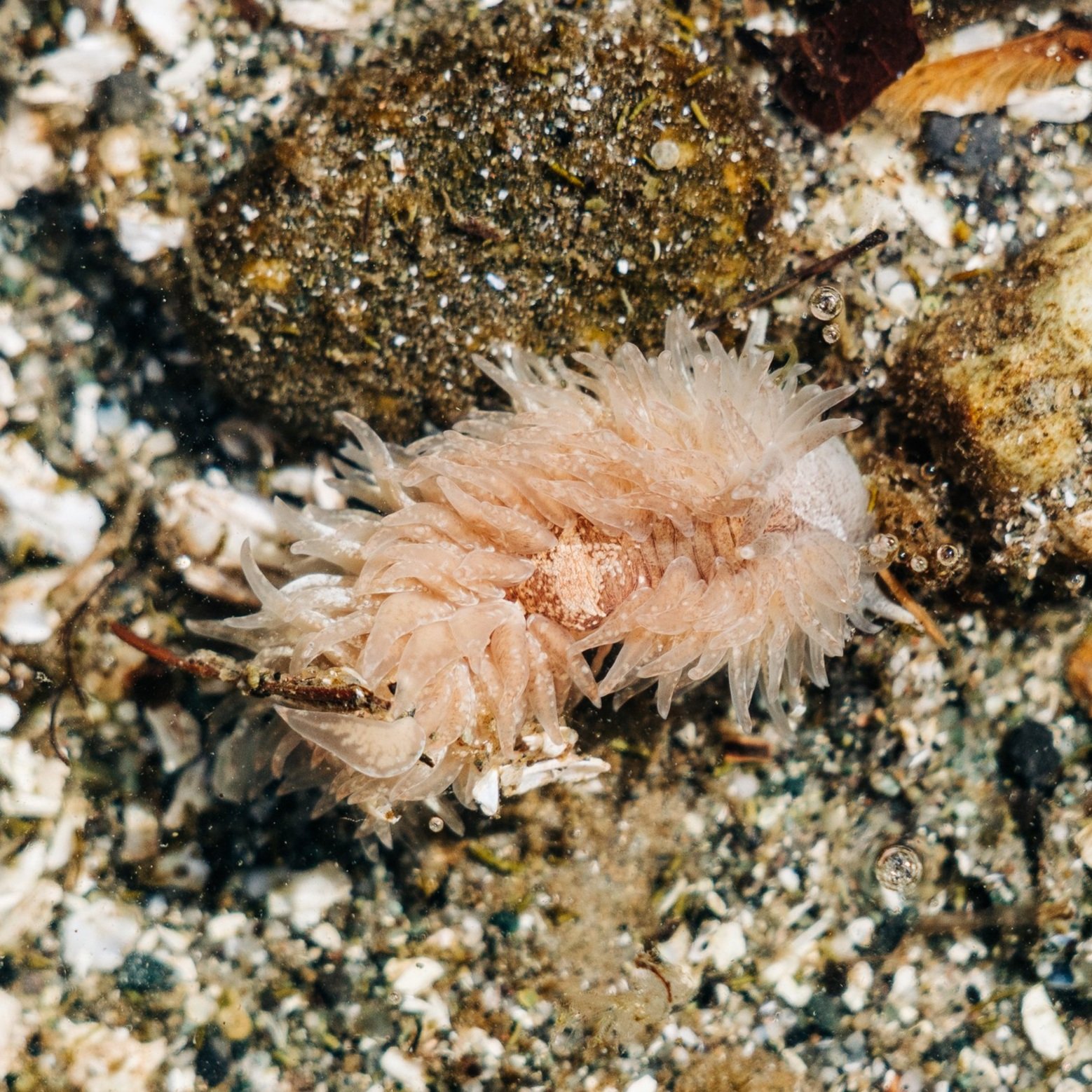
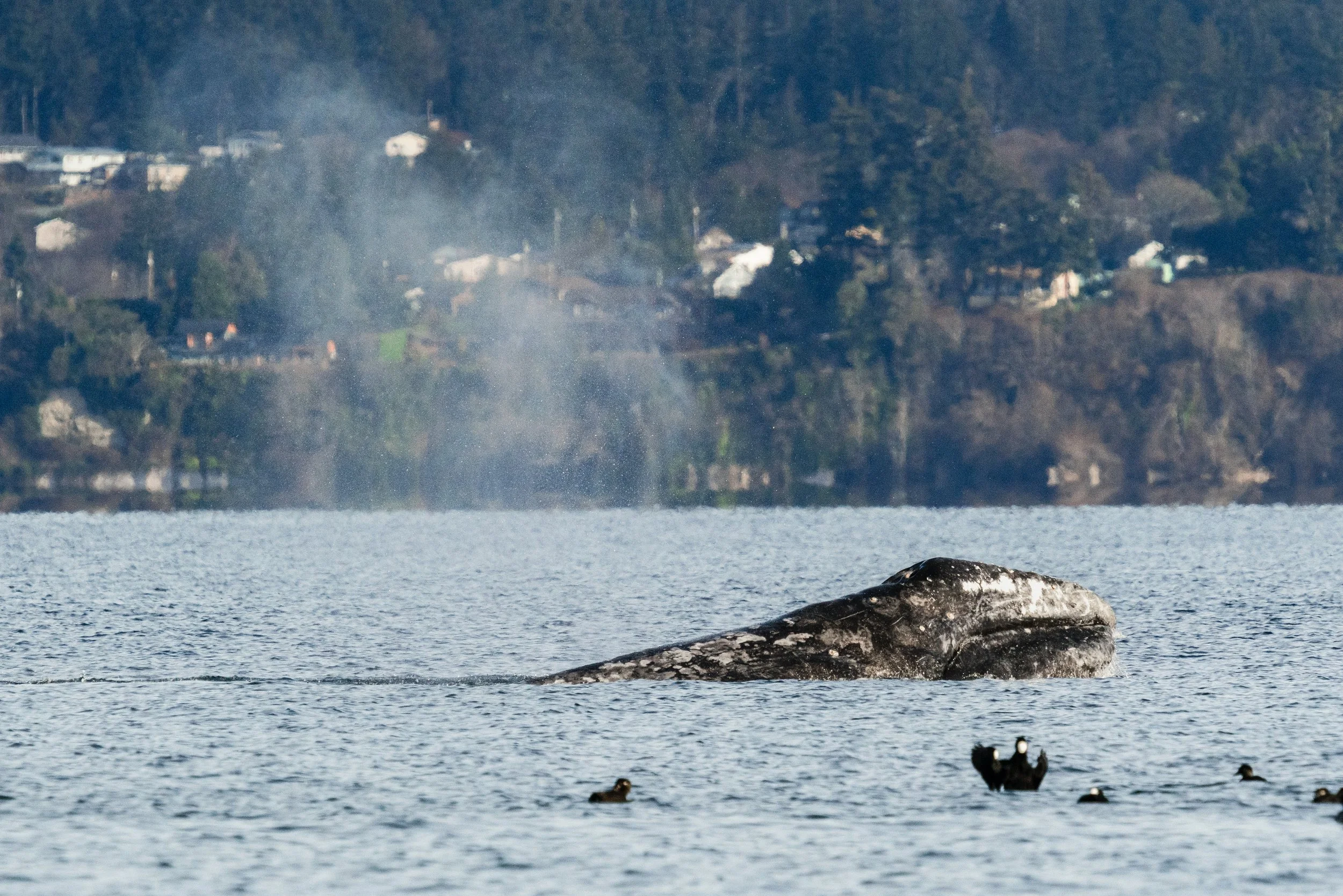
GRAY WHALES: Are they staying in one spot with two weird fins in the air, splashing around? You’re likely in the presence of a Sounder, chomping on ghost shrimp. They feed on their sides with one pectoral fin and one side of their fluke up in the air, doing a funny worm move to dig into the tidal flats, sucking up ghost shrimp and living their best lives. They’re likely close to shore and they’ll likely stay awhile, so settle in and enjoy. Head’s up: if it looks like they’re leaving just give them a minute because after feeding for a while they’ll go out to deeper waters but they’ll usually come back in to feed some more.
HUMPBACK WHALES: Like gray whales they’ll feed in one spot for quite a while but in the Sound it isn’t quite as easy to tell when they’re doing it. They generally don’t bubble net feed like they do in places like Alaska and when we’ve seen them feeding in the Sound they’re usually feeding on bait balls under the open water or along steep drop offs near banks. They’ll also occasionally lunge feed if the bait ball is near the surface.
MINKES AND FIN WHALES: Are they seemingly circling in one general area? Minkes and Fin Whales are notorious for this when they’re feeding, sometimes staying in the same area for days on end. The bad news is that they don’t surface super often and when they do it’s pretty quick, but the good news is that if you hang out for a while, or if you return the next day, you have the chance to get some pretty good looks at them.
Are they traveling in one direction pretty consistently? They’re likely in travel mode and where they stop is anyone’s guess. With orcas we’ll get ahead of them by quite a bit and assume they’ll keep traveling for a while. With baleen whales, though, we’ll usually stay put until they get out of our range or we see them stop and then we’ll go to them. They’re likely looking for another feeding ground and if you leave it can be hard to track them down again. If you do find them again, though, they’ll probably stay there for a while so it isn’t as vital to get really far ahead of them.
Other Tips + Tricks
Bring the right gear — Binoculars are a game changer and it gets windy + chilly out there. We keep classic PNW adventure gear in our car all the time and it’s saved us so many times.
Bring food + water — We all lie to ourselves and say that we’re only going to the beach for a little bit. 12 hours later we’re parched, starving, and ragged. Keep those granola bars stocked and the water bottles full.
Be mindful of property lines — Thankfully there are a lot of public access spots along Puget Sound, but there are also a lot of beaches that are private. Take a quick look around when you get there to make sure you know where you’re allowed to go and where you aren’t. Some communities welcome whale watchers and wildlife photographers openly and some are pretty grumpy (and vocal) about it.
Don’t be a stranger — If you see people on the beach with binoculars ask them where in the world the whales are. The whale community is generally pretty cool and super happy to share information with eachother
Report your sightings — Sightings don’t just help other people find ways, they also help researchers + scientists + government officials do their work, and they help vessels on the water keep the whales safe.
Get involved — If you spot these whales and fall in love with them, like we all have, seek out local orgs that are looking for volunteers or find some pieces of legislation that you’re passionate about and let your reps know!